Summary
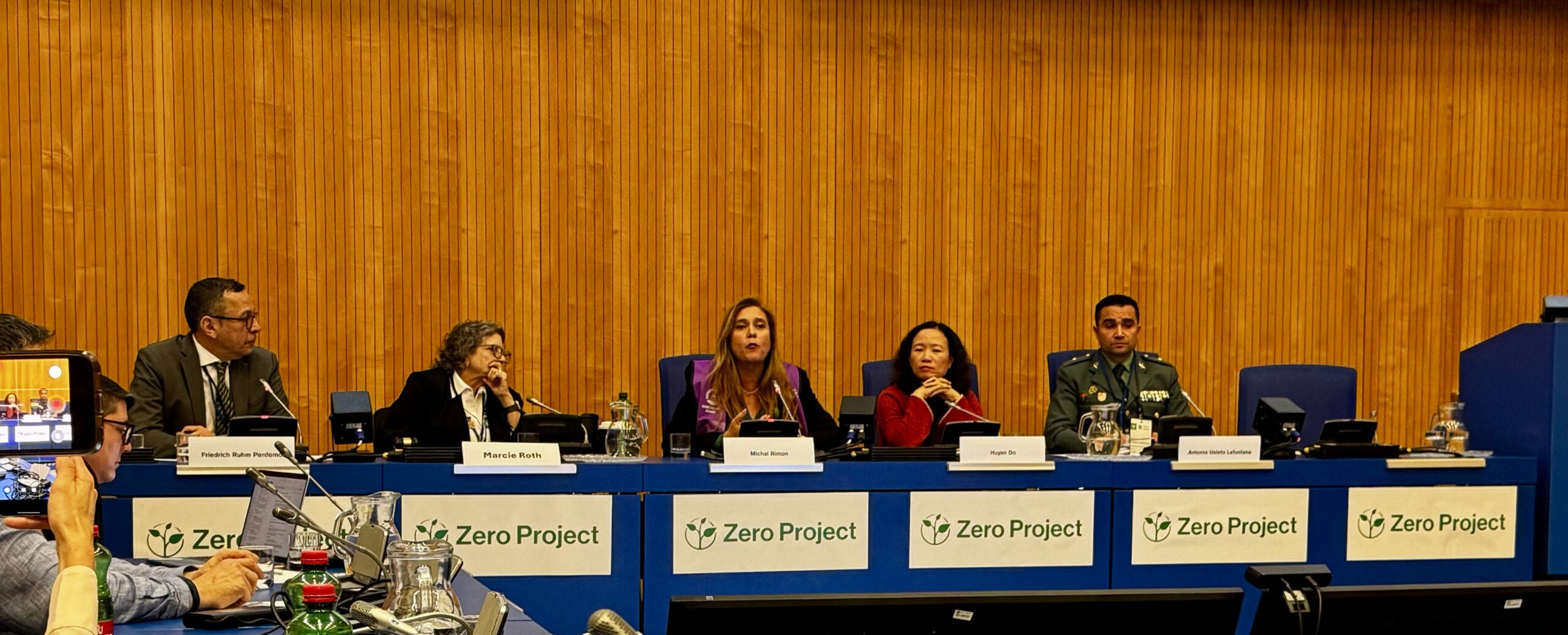
I attended the Zero Project Conference in Vienna this year, representing Intuit and the Magical Bridge Foundation. The event focused on disability inclusion, accessibility, and the rights of people with disabilities. The biggest lesson was that better results happen when disabled people are involved as leaders from the start. I saw strong examples in technology, public spaces, crisis response, and community programs. I also appreciated working alongside Sambhavi throughout the conference.
I was invited to join the Zero Project Conference in Vienna this year, and I was proud to represent both Intuit and the Magical Bridge Foundation. Across three days, I saw a wide range of disability-focused work, but the strongest message was consistent: accessibility moves forward when disabled people are treated as leaders, not just as an audience or a review step.
The conference also marked the anniversary of the UN Convention on the Rights of Persons with Disabilities (CRPD), which gave the week a deeper sense of purpose. That framing mattered. This was not just a gathering about tools or compliance. It was a reminder that disability inclusion is a human rights issue, and that real progress depends on changing who gets heard, who gets funded, and who gets to lead.
Disabled leadership changes the quality of the work
One of the clearest moments of the week came from Sinéad Burke, whose keynote pushed a simple but important idea: we need to stop treating disabled people as end users and start recognizing lived experience as expertise. That shift changes the work itself. Better leadership leads to better design, stronger policy, and more honest conversations about what inclusion really requires.
That same idea showed up in other sessions too. Whether the topic was public policy, education, cultural access, or technology, the strongest examples were the ones built with disabled people from the start. Not as a final review. Not as a symbolic panel. As real collaborators.
Good inclusion is built into systems
The most useful projects were not side programs. They were built into the systems people already use.
That showed up in the NextGen Accessibility Initiative, which worked with Gen Z organizations inside existing structures and has already helped 200,000 students get accommodations, support, and education. It was a strong example of how youth work can move beyond tokenism when it is connected to real follow-through.
It also showed up in projects like Slovenia’s disability-led mobility work, which used tactile maps and detailed access reporting in a way that could be standardized and reused: Enable multimodal mobility in Slovenia.
And it showed up in physical spaces like Singapore’s Punggol Library accessibility work, where wider aisles, clear routes, and thoughtful layout choices make access feel built in rather than patched on.
Crisis response was one of the most urgent themes
Some of the most important sessions focused on crisis response. These examples made it clear that emergency planning still too often leaves disabled people behind unless disability is built into the process from the beginning.
Projects like Purple Vest and GADRA showed what it looks like to plan for evacuation, support, and communication in a more inclusive way. One figure stayed with me: only 1% of disaster relief funding goes to disability-led organizations. That gap says a lot about who is trusted to lead, even in spaces where disabled people are directly affected.
I was also struck by the practical power of Spain’s pictogram-based emergency communication tools, which were designed to help police and responders communicate more respectfully and effectively with Deaf, non-verbal, and multilingual communities: Communication Guide with Pictograms for Emergency Situations.
Inclusion is about daily life, not just policy
 Another thing I appreciated about the week was how broad the conversation was. Accessibility was not limited to digital products or legal standards. It extended into parks, schools, sports, arts, travel, and movement.
There were strong examples in culture, including the work of Europe Beyond Access, which supports disabled and Deaf artists and provides practical toolkits for more inclusive events.
There were thoughtful examples in mobility and assistive tech too, from Loopwheels and MATT to the local, sustainability-focused work of Kyaro Assistive Technology. What stood out there was not just invention, but fit. Good disability innovation has to work in the places people actually live.
I also appreciated seeing how inclusion is being rethought in fitness through Sekond Skin Society, which is building movement spaces for and with disabled people, not as a separate track but as part of shared community.
What I brought home
I left Vienna reminded that accessibility is bigger than compliance and broader than any one discipline. It touches policy, design, emergency response, education, public space, culture, and technology. Most of all, it is about structure. If disabled people are not part of leadership, funding, and decision-making, then even well-meaning work can stay shallow.
Zero Project brought together a wide range of examples, but the throughline was clear: inclusion works best when it is built into the system, shaped by lived experience, and supported by community.
And a special thank you to Sam Chandrashekar for being my collaborator throughout the week. Having someone to think with, compare notes with, and reflect with made the experience even stronger.